Art Projects Queen Mary Tudor Art Class Queen Mary Tudor
Female leaders tend to exist either glorified – such as Elizabeth I of England – or vilified, which is most definitely the instance for Elizabeth's sister, Mary I of England.
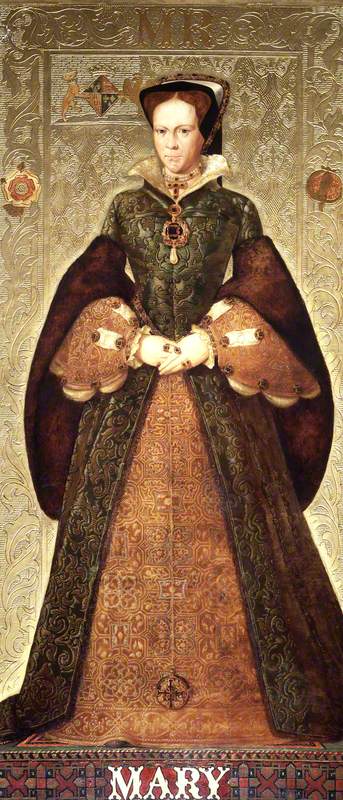
Fifty-fifty though Mary was not supposed to be queen, she became the beginning adult female to claim the English crown since Empress Matilda in the twelfth century. Dissimilar Matilda, however, she was successful in property the throne. When Lady Jane Grayness was finally deposed on 19th July 1553, Mary was proclaimed queen, afterward being crowned at Westminster Abbey on 1st Oct of the same year.
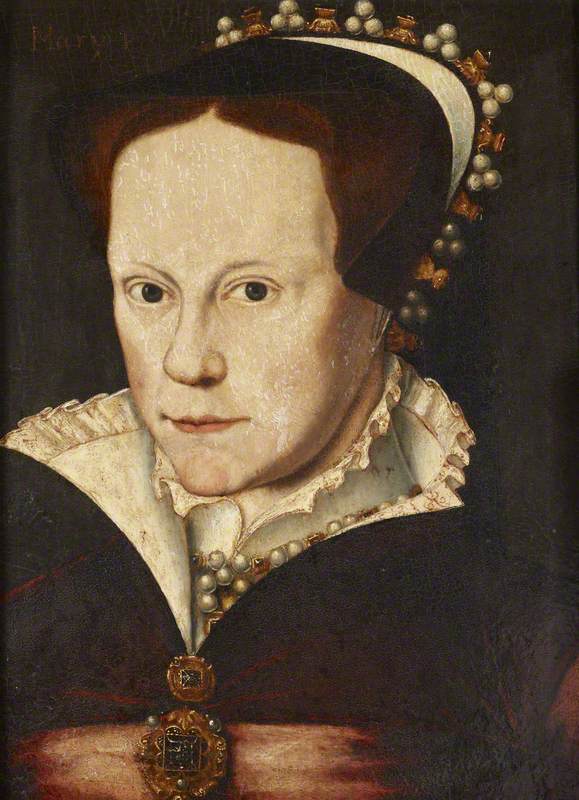
The word surrounding Mary's reputation equally queen has been dominated past the Protestant persecutions that occurred during her fourth dimension, withal it is important to note that she did nada different from her Catholic European male counterparts, such every bit Henri Two of French republic or Charles Five, Holy Roman Emperor.
At the time, eradicating heresy was considered to exist a duty for any Catholic ruler, a duty that was praised past the Cosmic Church building. In that respect, Mary was only following the Pope's orders, then why was she the only ruler to be vilified for these particular deportment?
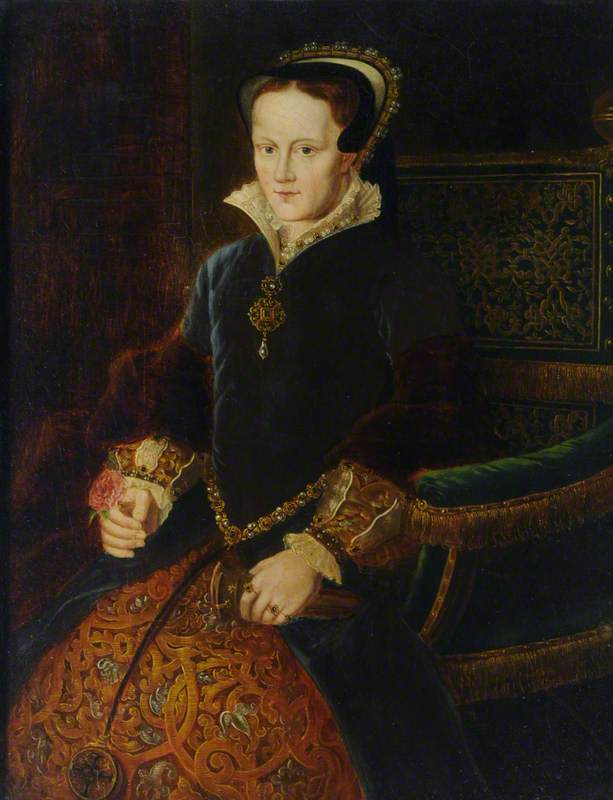
In recent years, scholars and academics have tried to reassess Mary's reputation and her reign as a whole. Was information technology really such a failure, as and so many seem to claim? Certainly, one cannot ignore that in all her portraits she is depicted as a stern and hostile figure.
Merely Mary'southward reign consisted of much more than the persecutions of Protestants. In a world dominated by men, Mary was the first female person ruler to play the roles of both king and queen.
She too personally negotiated the terms of her marriage with Philip 2 of Spain, the greatest match in Europe at the fourth dimension. Her diplomatic skills meant that she was able to secure her rights as an English sovereign besides as ensuring England'due south independence from Spanish dominions.
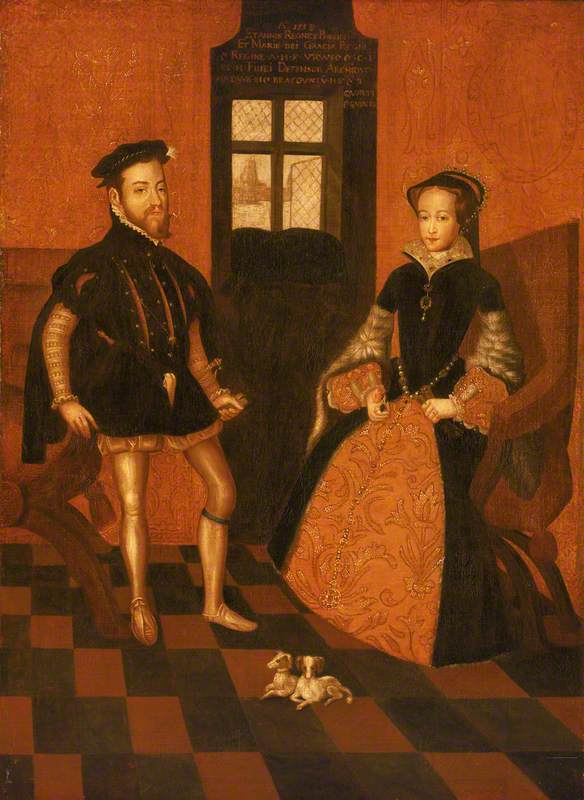
Of course, Mary'southward bloody reputation is also intertwined with the demise of Lady Jane Gray, the nine-day queen, who was used as a pawn by her begetter-in-law, John Dudley, Duke of Northumberland, to try to usurp the throne.
Looking at the evidence bachelor, Mary seems to accept been reluctant to condemn her younger cousin likewise harshly – she actually postponed the execution and even contemplated giving her the royal pardon – only events decided otherwise.
As Lady Jane Gray remained a threat to Mary's crown and life, Mary had no other option but to consent to her execution. And so, on 12th October 1554, Lady Jane Grey was beheaded at the Tower of London.
This famous nineteenth-century reimagining of her execution is highly emotive and cemented the event in the collective popular imagination.
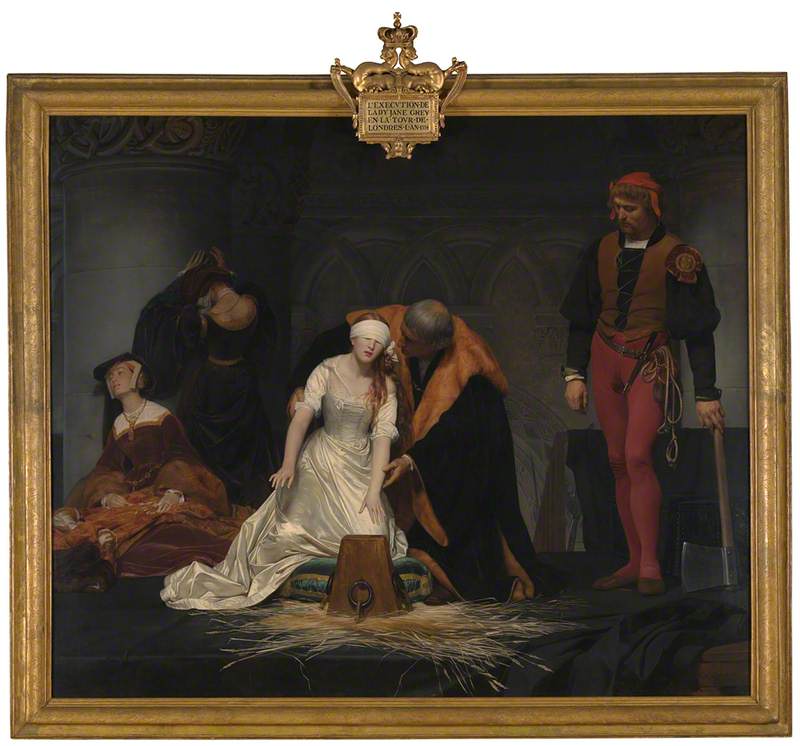
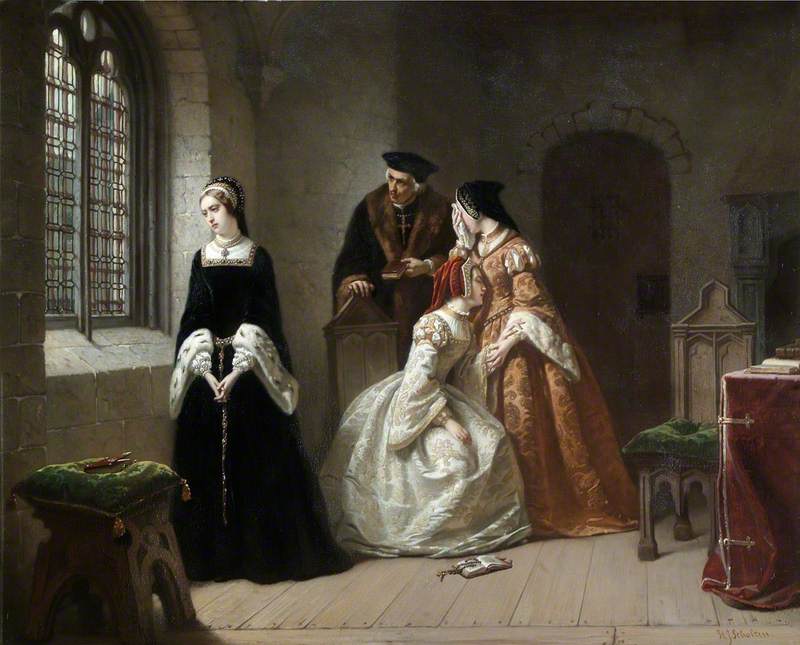
In many ways, this death tarnished Mary'south reign, with Lady Jane Grey – the Protestant martyr – becoming a symbol of Mary's cruelty. Portraits of Lady Jane Greyness continued to depict a helpless young woman who suffered desperately at the hands of 'Bloody Mary'.
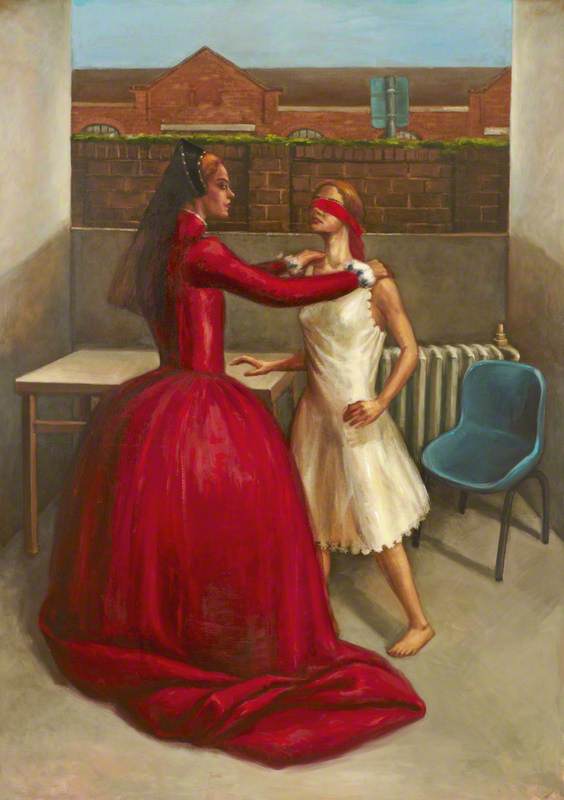
The crimson of Mary'due south wearing apparel dominates the following gimmicky double portrait – reminding the viewer of the queen'south atrocious nickname – while Lady Jane Grey is blindfolded with a red cloth, reminding united states of Mary's guilt. In these portraits, Mary seems to be constantly represented every bit the villain, no affair what accomplishments she achieved during her lifetime.
Mary's bad reputation was likewise shaped past John Foxe'southward Book of Martyrs. Originally published in 1563, this volume mostly served to glorify and legitimise Elizabeth's reign.
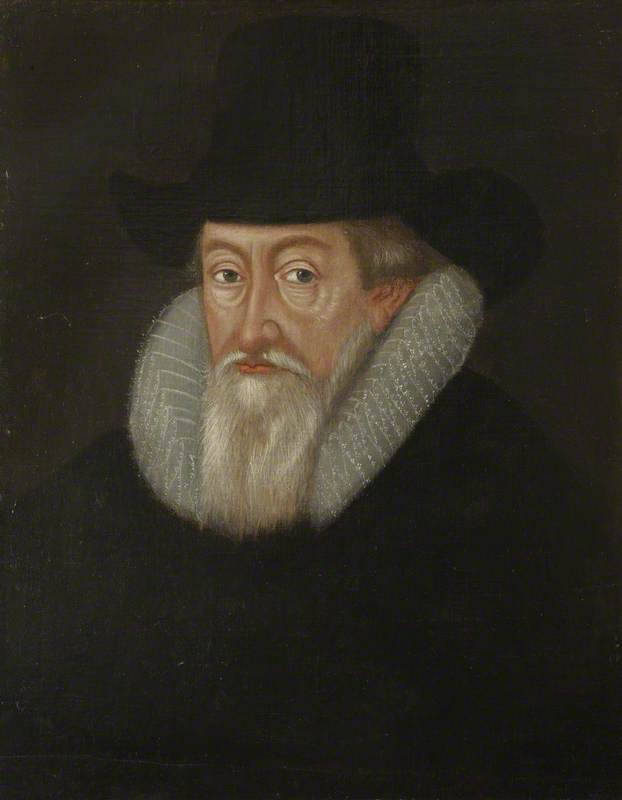
But the queen was more than than just 'Encarmine Mary'. She was also politically astute, with some of her advisors – such as the Spanish Ambassador Simon Renard – failing to influence her on some catchy political and diplomatic matters, such as the possible execution of Princess Elizabeth, her younger half-sister.
Even so despite her intelligence and political apprehending, Mary was remembered in many paintings as being a bloody ruler, such as in this Flemish painting. Here, her red apparel reminds the viewer, again, of the blood she acquired to be shed for her religious beliefs.
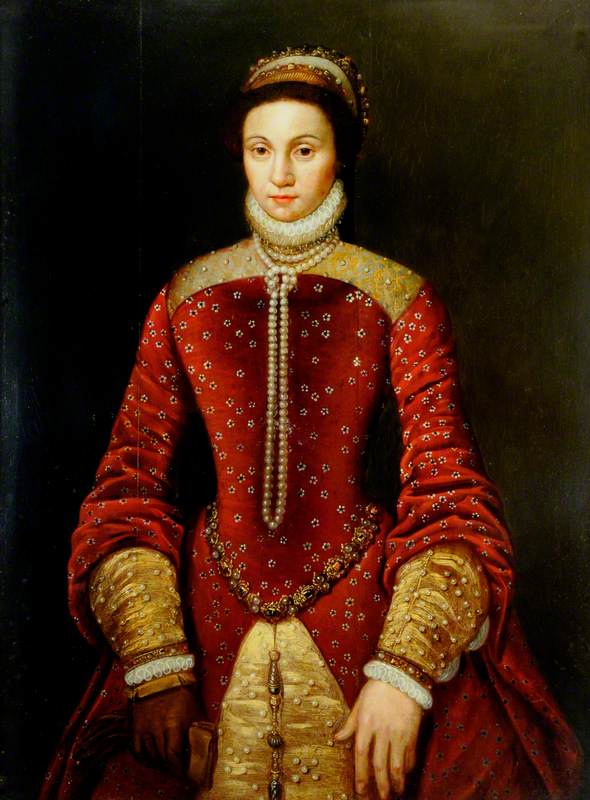
The attacks on Mary's queenship were mostly based on her gender. During the sixteenth century – and even afterwards – a woman was non seen every bit being fit to rule, and fifty-fifty after her decease pamphlets were printed (both during Elizabeth's reign and in the seventeenth century) that portrayed Mary every bit a monster. Paintings of her present the image of a rather unattractive adult female whose reign could only exist remembered every bit an utter failure.
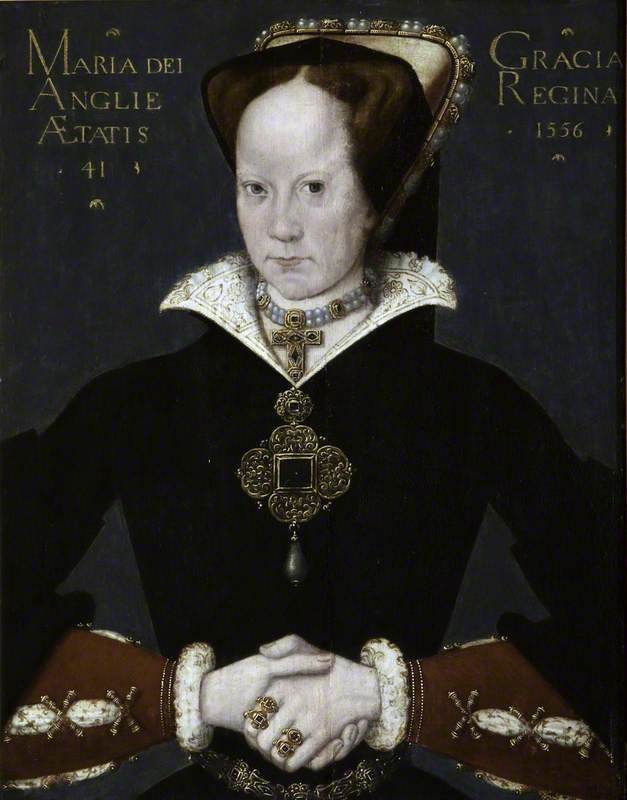
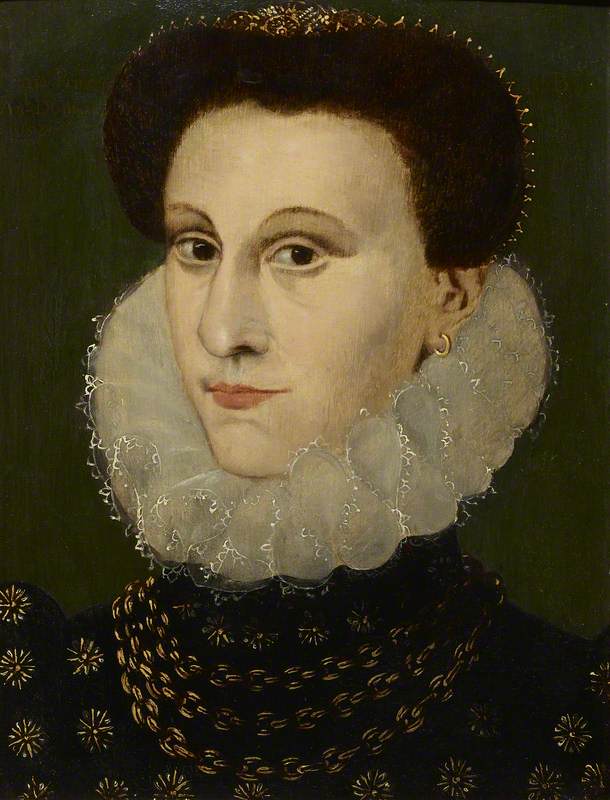
Even in a later on portrait dated around 1800, Mary is shown in an unflattering light – and so unflattering, in fact, that there is little resemblance to how she has been depicted in other well-known portraits. This illustrates how, in order to be vilified – and in order for people to remember them as being unfit to rule – women had to appear unappealing.
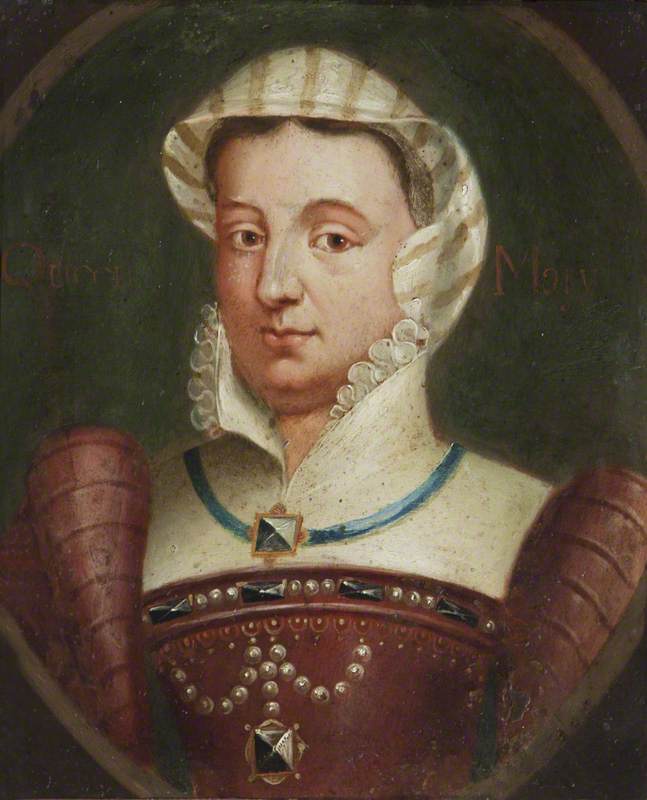
Ironically, Mary had ever paid a lot of attention to her advent. In fact, she wanted so much to be in command of her image that all portraits commissioned during her lifetime had to convey a sense of royalty, composure and authorization, showing her just in beautiful dresses.
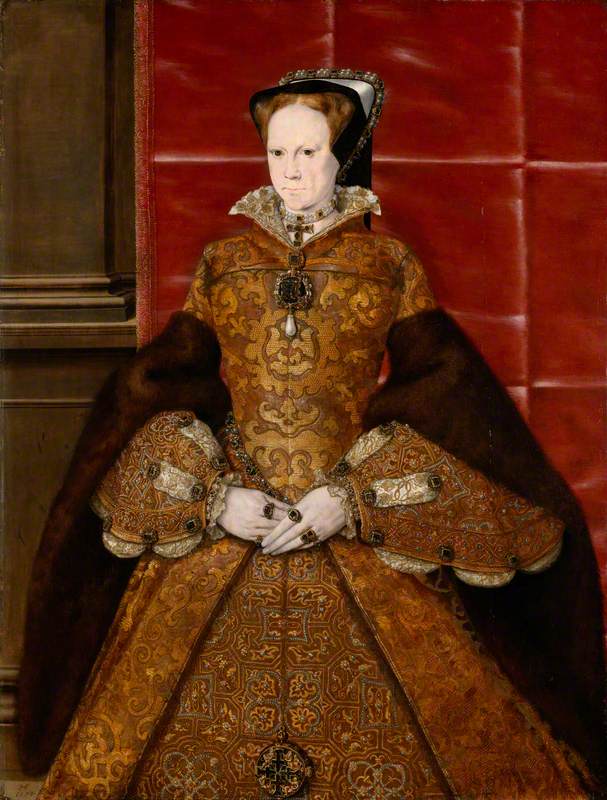
Certain paintings show Mary in a different light to the unattractive, unappealing queen, depicting a more purple and even beautiful ruler. In the portrait below, Mary is depicted as a pious queen, with her physical traits looking far more agreeable to the viewer. A reddish-royal colour still dominates the painting, however, ensuring the chilling epithet 'bloody' is all the same associated with her.
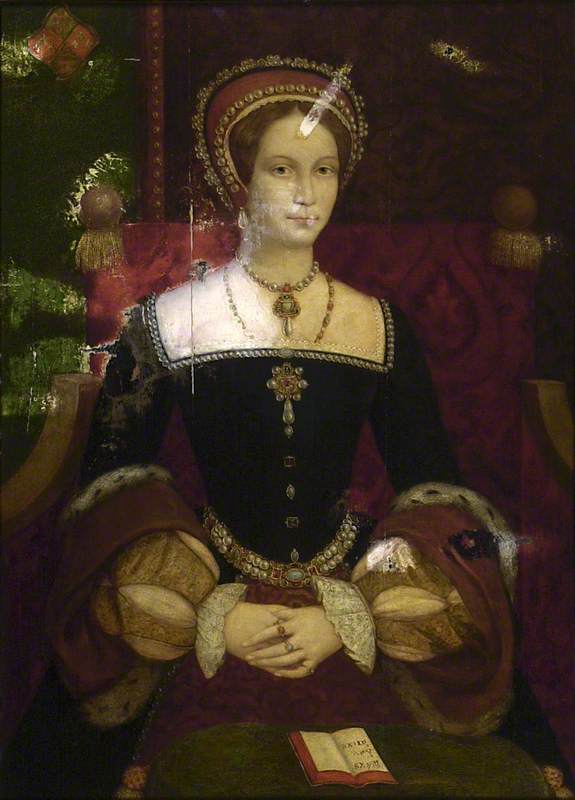
No affair how difficult scholars and historians have worked to deflate the myths effectually Mary's unfitness to rule, the perception of Mary – even when portrayed as a beautiful woman – has constantly been imbued with the colour blood-red, a stain on her image that seems impossible to clean or remove.
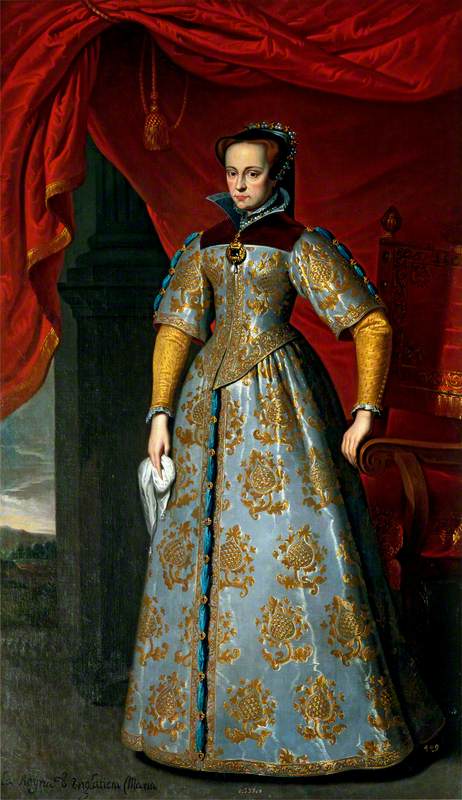
Mary was much more than just a persecutor of Protestants. She was the first female person ruler of England. She loved and treasured books. Mary's story is also the story of a woman desperate to become a female parent and who ultimately failed to secure her line.
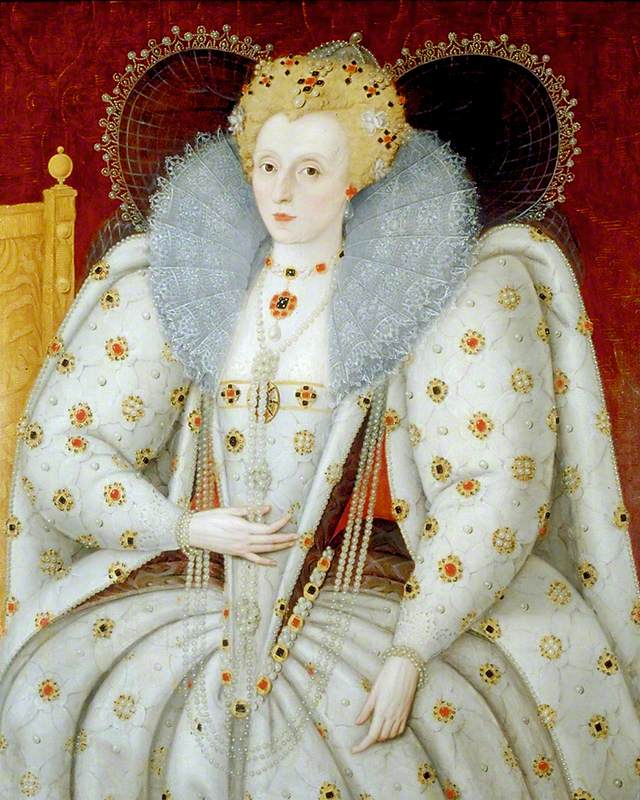
More than just 'Bloody Mary', Mary I of England greatly inspired succeeding generations of female rulers, including her sis, Elizabeth I.
Estelle Paranque, historian and writer
Farther reading
Sarah Duncan, Mary I, Palgrave Macmillan, 2012
Sarah Duncan and Valerie Schutte (ed.), The Birth of a Queen: Essays on the Quincentenary of Mary I, Palgrave Macmillan, 2016
Nicola Tallis, Crown of Blood: The Deadly Inheritance of Lady Jane Grey, Michael O'Mara, 2016
Valerie Schutte, Mary I and the Fine art of Volume Dedications, Palgrave Macmillan, 2015
More than stories
Artworks
Source: https://artuk.org/discover/stories/mary-tudor-a-reassessment-of-bloody-mary
0 Response to "Art Projects Queen Mary Tudor Art Class Queen Mary Tudor"
Mag-post ng isang Komento